|
|
|
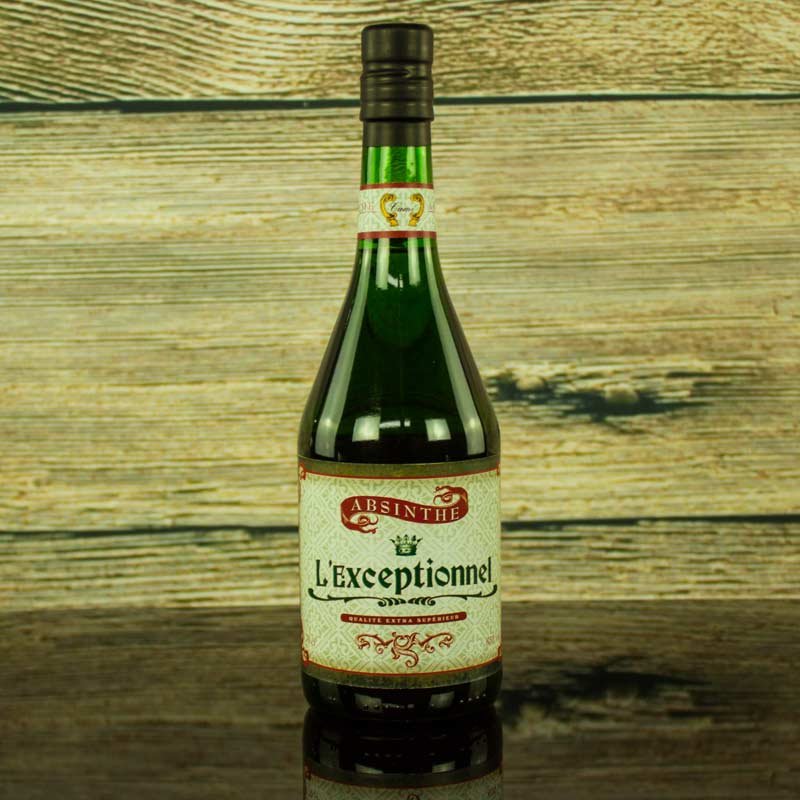
What you see here is everything
you need to enjoy absinthe in the traditional manner: fine absinthe, a
glass, an absinthe spoon, sugar, and a carafe full of ice-cold water.
Note: Under no circumstances should fire have any part in the absinthe
ritual. This is a pointless innovation created in the 1990's and
promoted by the purveyors of imitation absinth to make their
products seem more interesting and to reinforce the illicit drug image.
Likewise, absinthe being in the 106
- 148 proof range, it is not intended to be drunk neat or in shots, but
should be tempered with water, making it about the strength of a glass of wine.
|
 |
|
The spoon is perhaps the most unique bit of absinthe paraphernalia.
It consists of a flat, perforated trowel-like tool with a small
indented area in the handle to hold it in place on the edge of the
glass. The perforations allow the water and melting sugar to pass into
the glass of absinthe below.
During the Belle Époque, there were quite a variety of styles available, many of which can be seen at Oxygénée's Virtual Absinthe Museum.
There
are several nice reproductions available today at reasonable prices.
If you do not have a proper absinthe spoon yet, a common fork will do.
|
 |
|
As with coffee or tea, whether to use sugar is entirely a matter of individual
taste. Sugar cubes are not as commonly used in the US today, but are
fortunately still available in many places. Some sugar cubes are
rather small and you may choose to use two. Or, if you prefer, you may
choose not to use it at all.
Gourmet sugar cubes are available in both refined and raw varieties, as shown, but tend to take longer to dissolve.
|
 |
|
The earliest absinthe glasses were ordinary
water glasses of the type in which water, wine, lemonade or iced tea
were served in bistros. Later, glasses were made with reservoirs or
markings which helped the servers pour the correct amount of absinthe.
In a pinch, a large wine glass will suffice. Most kitchen supply stores stock glasses which are appropriate.
|
|
Start by pouring a quantity of absinthe into the glass equal to
about one fifth of its capacity. About an ounce to an ounce and a half
is common. With experience, you will determine the best
absinthe-to-water ratio for your taste. |
 |
Place the spoon across the rim of the glass,
with the notch of the spoon resting on the rim and place a sugar cube
upon the spoon. |
|
|
If you are using a carafe, begin by pouring a small amount of water onto the sugar, saturating it. Allow it to sit for a minute or two so that the sugar begins to loosen and dissolve on its own. Then begin slowly drizzling a very slender stream of water onto the sugar cube. You may
want to practice for a while in an empty glass to develop a pouring
technique that suits your carafe or pitcher.
Since absinthe comes in a variety of proofs some will require more water than others; you can use the calculator below to assist in pouring drinks of approximately the same strength.
|
Absinthe Tempering Calculator
|
|
|
Also,
there are fountains made especially for absinthe which can be used to
drip the water slowly.
As
you add water, watch closely as it mixes with the absinthe. When the
water-to-absinthe ratio reaches a certain level, the essential oils
which are dissolved in the absinthe during distillation will emulsify
with the water and create the marvelous, opalescent, cloudy effect
known as the "louche."
A proper louche is among the characteristics used to evaluate a premium
absinthe. It should be neither too thick nor too thin, indicating
either too much or not enough anise. Absinthe is above all, an anise
drink, but it should not be overpowering and candy-like. Some imitation absinthes—containing no anise—use gums and resins to obtain a louche. This was a hallmark of an improperly made absinthe in the 19th century.
A
good louche should be opalescent and translucent in good light, neither
transparent nor opaque. It is best observed in full sunlight, and is
appreciated even more with the second glass!
As the
glass slowly fills and the louche develops, the bouquet of the absinthe
is more fully released and you may detect fragrance notes which were
only barely perceptible in the undiluted absinthe.
Continue slowly pouring until the sugar cube is completely dissolved.
Coordinating
the speed of the pour so that the sugar cube is dissolved at about the
same time the glass is nearly full is the essence of the absinthe
ritual. Most absinthe drinkers use a water-to-absinthe ratio of between
3:1 and 5:1.
|
 |
|
Stir any remaining, undissolved sugar in the bottom of
the glass.
You may want to leave room for a couple ice cubes. If you choose
to use ice, you should take that into account when deciding how strong
to pour your drink as the melting ice will dilute the drink further.
|
 |
|
Now, sit back and sip your absinthe slowly.
While anise or fennel is usually the predominant flavor and aroma in
absinthe, and some of the finest absinthes use only six herbs, there
can be a number of other herbs used, many of which are easily
discernable while others are more subtle and elusive.
Roll
the absinthe around in your mouth and pay close attention to the
flavors and sensations on various part of your mouth and tongue.
Enjoy! The Green Hour is at hand!
|
Click here to download a printable PDF version of this page. Adobe Acrobat Reader required.
Watch the preparation in real time:
|